


Unveiled:
The Story Behind the Bra - Part One:
Who Decided What a Woman’s Body Should Look Like?
For hundreds of years, women’s underwear has been doing more than supporting our bodies. It has been shaping them.
Corsets and stays created the fashionable female silhouette of their time. Waists were pulled in, breasts lifted, bodies moulded into whatever shape society considered beautiful.
The fashions changed. The corset eventually gave way to the bra. Women gained greater freedom and movement. Underwear became lighter, more comfortable and increasingly sophisticated.
But one idea never entirely disappeared. That our underwear should help our bodies conform to whatever the desirable female shape happened to be.
In the 1920s, breasts were flattened. Later they were lifted and separated. The 1950s brought the pointed, projected breast. Then came cleavage, push-up, minimising, maximising.
Flatten them. Lift them. Push them together. Make them smaller. Make them bigger. We became incredibly good at changing the way women’s breasts looked.
But did we spend enough time asking how women felt?
I know this industry because I was part of it. I spent six years in M&S Underwear. I was Head of Buying and ultimately went on to run the business. And I loved it.
We created beautiful products. We worked with great suppliers. We cared enormously about quality. We talked about product, price, suppliers, ranges, sales, margin and profitability.
And, of course, we talked about fit. We had highly experienced technologists, rigorous M&S fit standards and professional fit models. Bras were measured, assessed and graded across sizes.
It was a sophisticated product-development process. But knowing what I know today, I have started to question what we actually meant by fit.
There is a difference between fit and feel
Our bras were fitted on professional fit models whose bodies and measurements met particular specifications. That makes complete sense when you are developing product at scale.
But women don’t exist to a specification. Breasts are different shapes and sizes. They are often asymmetrical. Our bodies change as we gain or lose weight, have children, breastfeed, age and go through menopause.
Women were never standard.
And there was something else our fit process couldn’t really capture. Time.
A fit model put a bra on during a fit session. We looked at the measurements, positioning, shape and aesthetic. The technical team assessed it against our standards. Then it came off. We weren’t seeing what happened after eight hours. Or twelve. Or day after day, month after month.
We weren’t seeing the woman who came home desperate to take her bra off. The woman with deep marks on her shoulders. The woman whose underwire dug into her. The woman experiencing neck or back pain who had never considered that her bra might be contributing to it.
We were testing whether the bra fitted our standard.
But did our standard fit women?
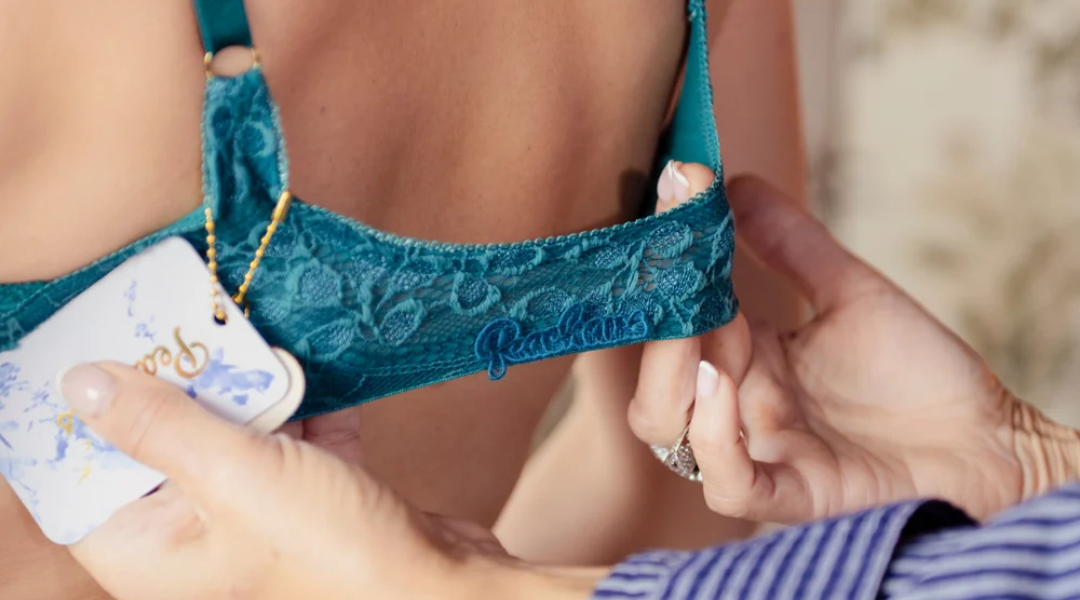
I was Head of Buying for M&S Lingerie - I eventually ran M&S Underwear. And I never fitted a bra on a woman. I find that extraordinary now.
Because today I spend so much of my life talking to women about their breasts, their bras and how they actually feel wearing them. I fit them, I see their bodies, their pain, their vulnerability.
And I realise something.
Back then, we understood the product incredibly well. But we weren’t really talking about the lived experience of the woman inside it.
I don’t remember conversations about women’s health. I don’t remember talking about what an incorrectly fitting bra might be doing to a woman’s neck, shoulders or back. I don’t remember talking about posture. Breast pain. Exercise. Or the impact of living with discomfort every day. And I certainly don’t remember asking one very simple question:
How does this woman feel?
This isn’t a criticism of M&S. There were brilliant people doing their jobs extremely well within one of the most respected lingerie businesses in the world. I was one of them.
It’s about something much bigger. It’s about what we, as an industry, understood the job of a bra to be.
Then I started fitting women
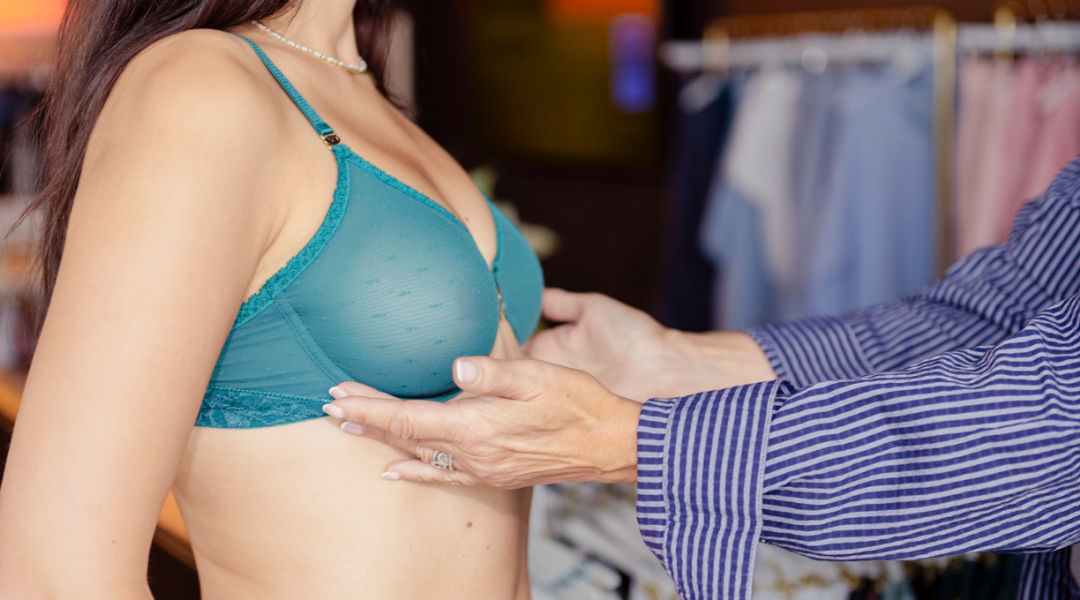
Years later, building Peachaus changed everything for me. I started standing in fitting rooms with women. Different ages. Different bodies. Different breasts. Different stages of life.
And I started listening. Women told me about discomfort they had lived with for years. They showed me marks on their shoulders. They told me they couldn’t wait to take their bra off at the end of the day. And again and again, I heard some version of:
I thought that was normal.
That changed something for me. I had spent a significant part of my career understanding bras commercially. Now I was beginning to understand them through the bodies of the women actually wearing them. And those are two very different perspectives.
We know more now
Research suggests as many as 80% of women may be wearing the wrong bra size. From my experience, it is in fact higher than this.
And poor bra fit goes far beyond discomfort. Research cited in our expert review associates poor fit with neck, back and shoulder pain, postural changes, skin complications and breast pain. It can affect body image and confidence and become a barrier to physical activity.
I spent decades in fashion. I didn’t understand the scale of this.
I do now.
And that’s why I believe we have to start looking at the bra differently.
The history of underwear is one of incredible innovation and progress. We moved beyond the corset. We developed sizing systems. We invented new fabrics, technologies and construction techniques. We made bras accessible to millions of women.
But perhaps the next innovation isn’t another bra. Perhaps it’s changing what we believe a bra is actually for.
For generations, we’ve asked women’s bodies to fit our ideas of beauty, our sizing systems and our products.
What happens if we finally start building the system around women?
That’s what I want to explore next.
The Story Behind the Bra, Part Two: The Bra Needs a New Purpose.
Gilly
X